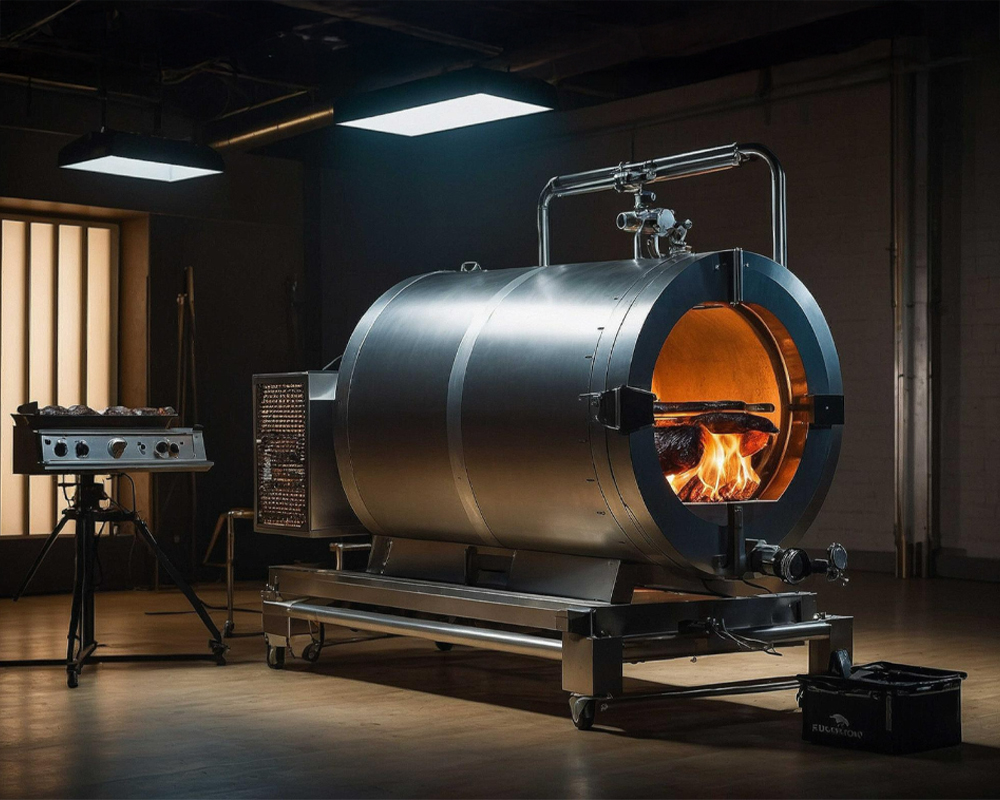
In the world of advanced materials, graphite is far more than a common material, it is a critical component in lithium-ion batteries, electrodes, refractories, and high-performance composites. Transforming organic carbon sources such as biomass or petroleum pitch into highly ordered structure of carbon atoms, graphite requires a carefully controlled thermal process. This transformation is enabled through advanced high-temperature furnaces designed to deliver precision, consistency, and scalability.
At Ants Innovations, our thermal processing systems are engineered to make this complex conversion reliable and efficient. The process typically involves two key stages: Pyrolysis, carbonization and graphitization.
Pyrolysis: Thermal Decomposition of Organic Matter
The journey begins with pyrolysis, where organic precursors such as coconut shells, wood biomass, agricultural waste, or petroleum pitch are heated in an oxygen-free environment at 300–600 °C. During pyrolysis, complex organic molecules thermally decompose into char, bio-oil, and gaseous products. The process breaks down cellulose, hemicellulose, and lignin structures in biomass, leaving behind a carbon-rich solid residue. This step determines the initial carbon structure, porosity, and yield, which strongly influence the quality of the final graphite. Controlled heating rates and inert gas environments help maximize char yield while minimizing unwanted oxidation or structural defects.
Carbonization: Removing Volatile Components
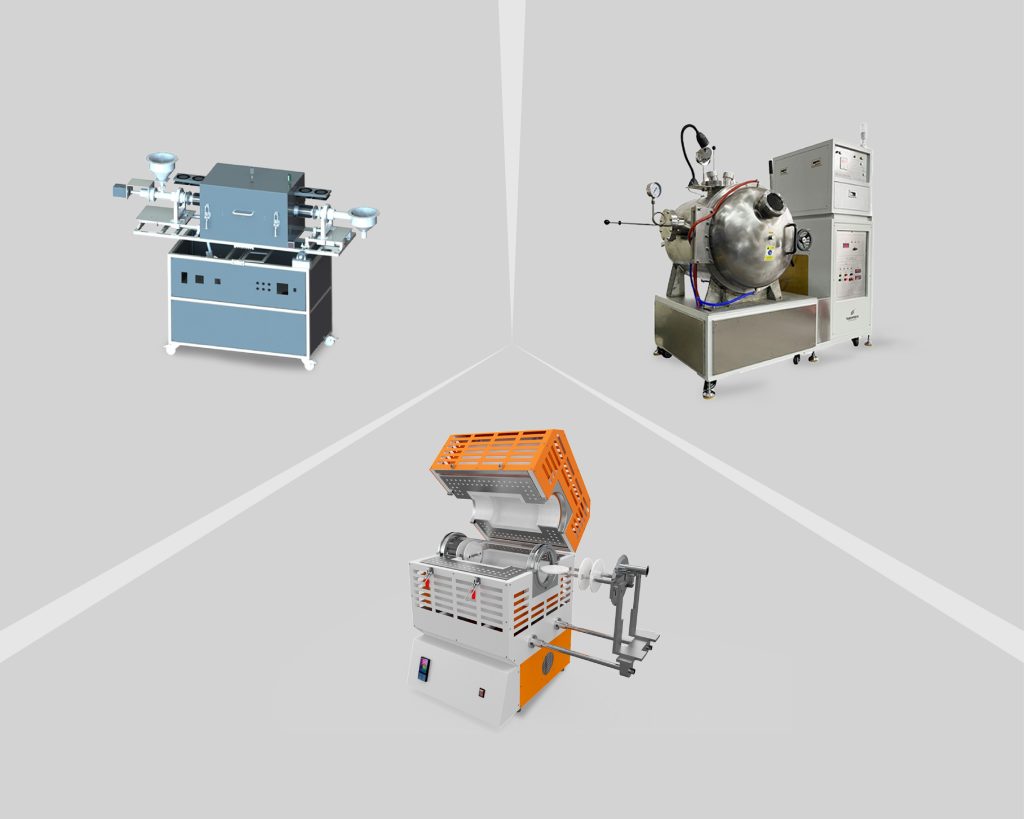
After pyrolysis, thermal decomposed material undergoes carbonization, typically carried out between 600–900°C under an inert atmosphere such as nitrogen or argon. At this stage, remaining volatile compounds, tars, hydrogen, and oxygen-containing groups are removed, resulting in a more stable amorphous carbon framework. The structure becomes increasingly carbon-rich and begins to develop short-range ordering. Rotary tube Furnaces
provide uniform heating with controlled temperature ramps and continuous nitrogen purging. This ensures high-purity char formation with yields typically in the range of 70–80 %, providing a reliable precursor for graphitization.
Graphitization: Crystalline Graphite
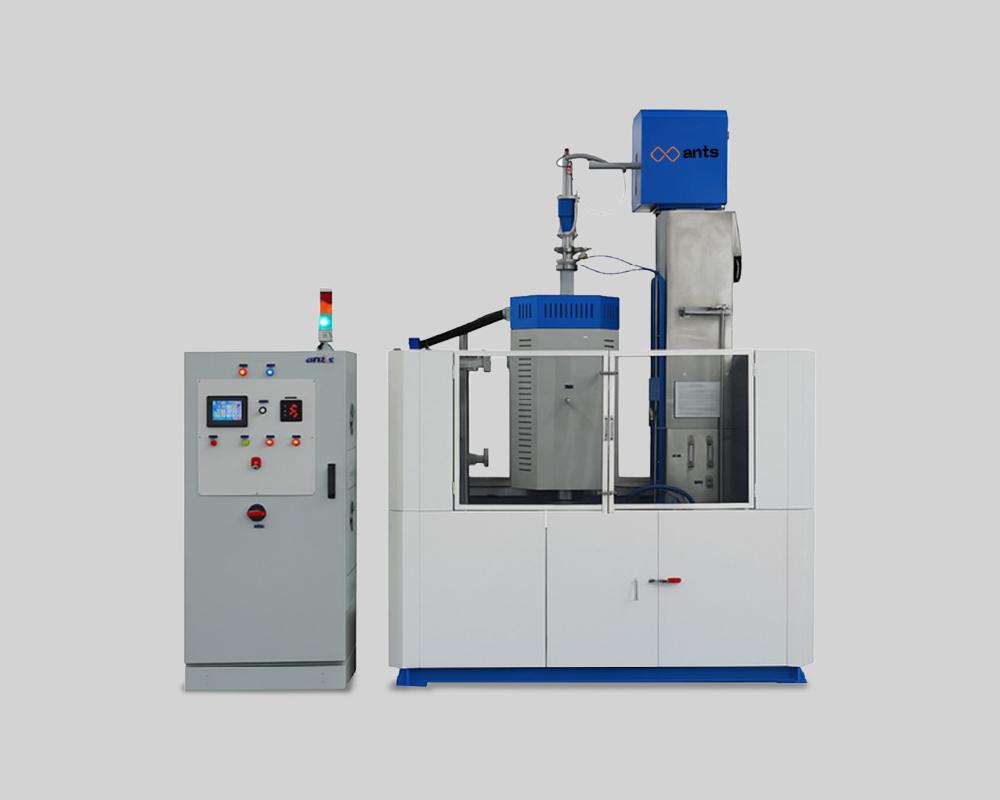
The final transformation occurs during graphitization, where the carbon structure reorganizes into highly ordered hexagonal graphite crystals. This process requires ultra-high temperatures between 2000–2500°C in specialized induction furnaces operating under vacuum or inert atmosphere. Under these extreme conditions, carbon atoms rearrange into stacked graphene layers, forming graphite with a graphitization degree exceeding 95 %. Impurities such as sulfur or residual ash are vaporized or segregated during the process, further improving material purity. Maintaining uniform thermal conditions and adequate dwell time is critical; otherwise, the carbon may remain in a turbostratic form, lacking the long-range crystalline order required for high-performance applications.
Ants Innovations provides advanced thermal processing systems designed for demanding carbon materials processing:
- Precision Temperature Control: Advanced PID systems maintain stability within ±5 °C, even at temperatures approaching 2500 °C.
- Scalable Solutions: Furnace configurations support both laboratory-scale research and industrial production.
- Energy Efficiency: Induction heating technologies can reduce energy consumption by 20–30 % compared with conventional resistance heating.
- Application Versatility: Suitable for producing materials used in Li-ion battery anodes, refractories, carbon composites, and nuclear-grade graphite.
Sustainable graphite production from biomass-derived carbon sources is emerging as a promising alternative to mined natural graphite. With advanced thermal processing technology, Ants Innovations supports industries and researchers in developing scalable and environmentally responsible graphite production pathways.
 By innovbeyond