In today’s fast-paced world of materials manufacturing, the need for precision thermal processing is crucial. Whether it’s making nanomaterials like graphene, activating catalysts, or treating powders and films for electronics, the performance of thermal equipment affects product quality, consistency, and scalability. As industries explore innovations in semiconductors, energy storage, aerospace, and defence, choosing the right furnace is a key decision. Among various options, split tube furnaces and rotary tube furnaces are two of the most versatile systems. Each has distinct advantages tailored to specific needs. Split tube furnaces are known for their precision, access, and multi-zone control, making them great for high-purity, static processes. In contrast, rotary tube furnaces excel in continuous, dynamic processing, particularly for powders and bulk materials that need better mixing.
Split Tube Furnaces: Precision with Access
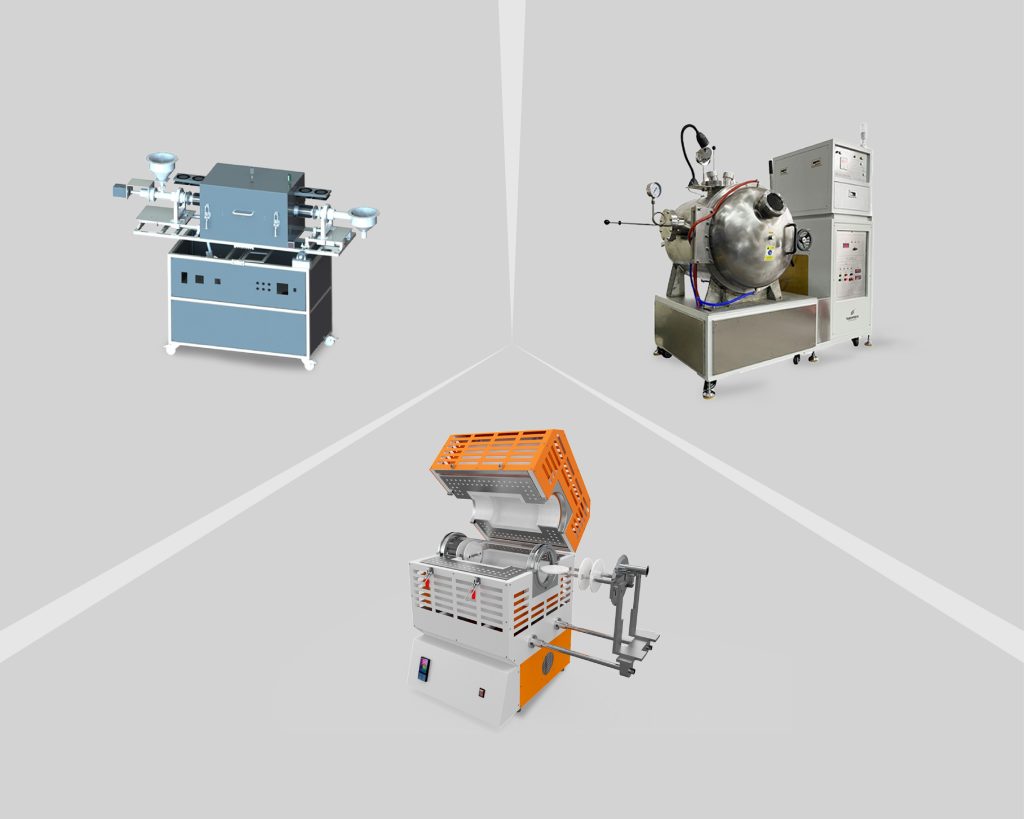
Split tube furnaces have a hinged body that lets you open the heating chamber for easy access to substrates and internal parts. These furnaces work well for Chemical Vapor Deposition (CVD), annealing, and other processes that need precise temperature control and uniform heating. Their multi-zone heating features make them perfect for research and high-purity applications like graphene synthesis and semiconductor processing.
Key Benefits:
- Multi-zone temperature control
- Easy substrate handling and maintenance
- Great for static or batch processes
- High uniformity and repeatability
Rotary Tube Furnaces: Continuous Process
Rotary tube furnaces use a rotating quartz or ceramic tube that moves materials continuously through the heated area. This motion improves mixing, ensures uniform heat exposure, and supports ongoing processing, which makes rotary furnaces ideal for treating powders, activating catalysts, and thermal decomposition.
Key Benefits:
- Continuous material flow
- Improved mixing and uniform heating
- Suitable for bulk powder processing
- Great for scalable industrial applications
Choosing the right furnace for your thermal processing needs requires understanding your material type, process goals, and production scale. Split tube furnaces work best for applications that need high precision, such as thin film deposition, nanomaterial synthesis, and semiconductor annealing. Their multi-zone heating and easy access design make them particularly suited for static or batch processes where uniform temperature control and substrate handling are crucial. Conversely, rotary tube furnaces are more appropriate for continuous, high-throughput operations involving powders, catalysts, or bulk materials. The rotating tube enhances mixing and ensures consistent heat exposure, making it a top choice for scalable industrial applications. While split tube furnaces provide better control and flexibility for research and high-purity tasks, rotary tube furnaces offer efficiency and automation for dynamic, large-volume processing. Your decision should hinge on whether you prioritize precision and control or throughput and continuous operation.
Both types of furnaces have important roles in modern thermal processing. Split tube furnaces shine in precision, control, and access, making them perfect for high-purity and research-driven applications. On the other hand, rotary tube furnaces deliver unmatched efficiency for continuous, high-volume processing of powders and bulk materials. The right choice depends on your material type, process goals, and production scale.
 By innovbeyond