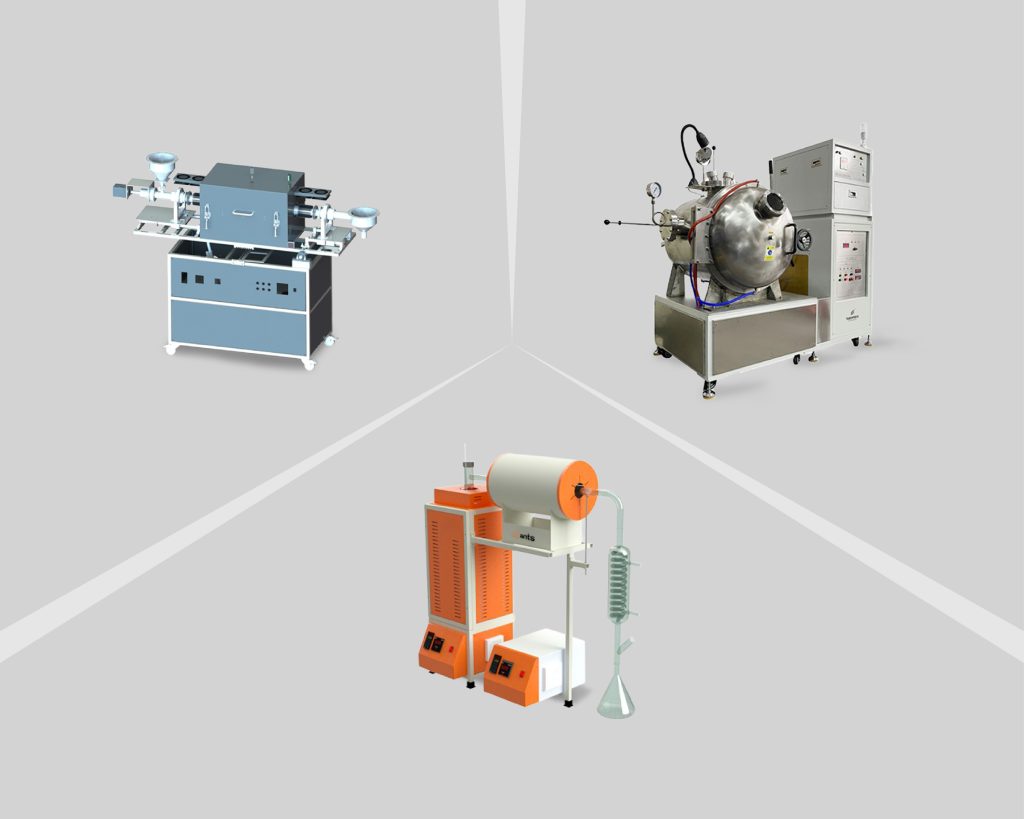
Indigenous Innovations in High‑Temperature Vacuum Hot Press Technology Enabling Advanced & Emerging Materials Research
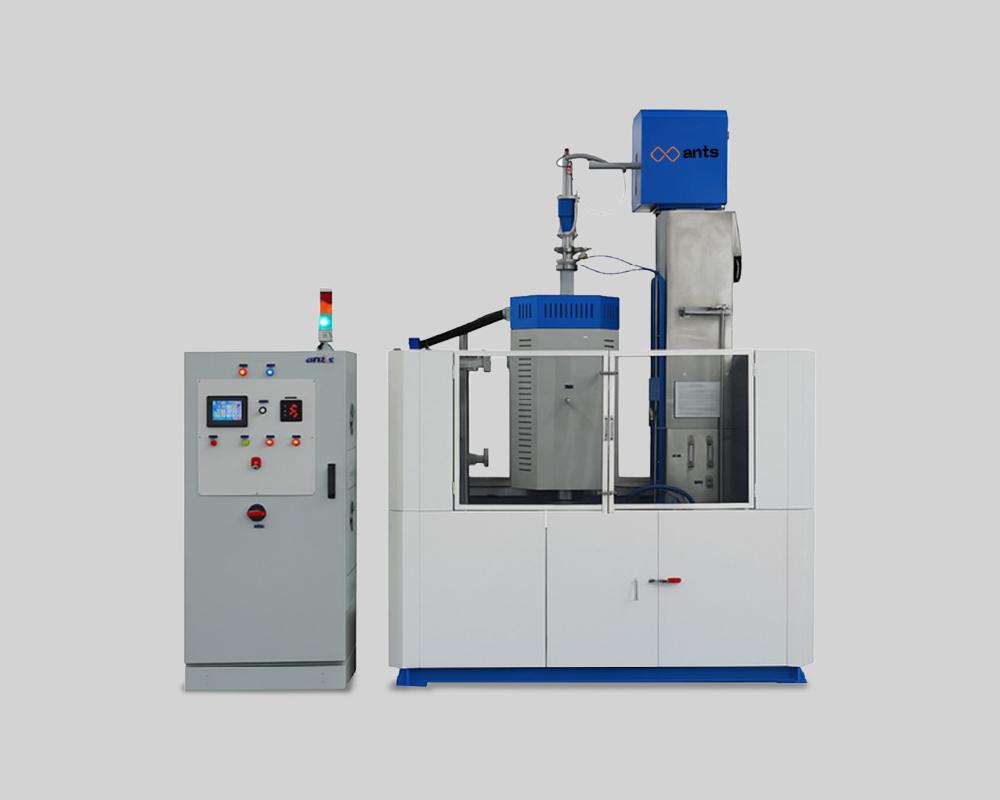
The rapid evolution of advanced ceramics, refractory metals, and functional materials demands processing equipment that can operate under extreme thermal and atmospheric conditions with exceptional control and reliability. Addressing this need, an indigenously developed High‑Temperature Vacuum Hot Press has emerged as a powerful solution for cutting‑edge materials research and pilot‑scale development.
This system brings together high temperature capability, precise uniaxial load control, and high vacuum processing in a compact, research‑oriented design tailored for Indian R&D ecosystems.
System Overview
The High‑Temperature Vacuum Hot Press is engineered to simultaneously apply:
- High temperatures (up to 1800 °C)
- Uniaxial hydraulic pressure (up to 15 tons)
- High vacuum environments (up to 10⁻³ mbar)
This combination enables densification, bonding, and consolidation of materials that are otherwise difficult or impossible to process using conventional furnaces or pressureless sintering techniques.
Key Technical Highlights
- Heating Method: Induction heating for rapid, uniform temperature rise
- Vacuum System: Diffusion pump‑based high vacuum generation
- Temperature Measurement: Pyrometer and thermocouple for accuracy across ranges
- Sample Sizes Supported: Ø 20, 40, and 60 mm
- Construction: Stainless steel body with double‑layer water cooling
- Automation & Control: PLC‑based system with safety‑integrated load control
- Cooling Support: Chiller capacity up to 5 TR
This robust design ensures process stability, operational safety, and reproducibility
Need of Vacuum Hot Press Technology
High‑temperature vacuum hot pressing is a critical material processing technique because it reduces oxidation and contamination, promotes rapid diffusion and particle rearrangement, enables near‑theoretical density, improves mechanical, thermal, and functional properties, and allows consolidation at lower temperatures compared to pressureless sintering.
Application Areas & Their Significance
Advanced Ceramic Densification
- Vacuum hot pressing is extensively used for densifying: Alumina (Al₂O₃) and Zirconia (ZrO₂); Silicon carbide (SiC) and Boron carbide (B₄C); high‑entropy ceramics and alloys.
- Achieves near‑theoretical density by limiting residual porosity and abnormal grain growth; improves mechanical strength, wear resistance, and thermal stability for high‑temperature service; enables structural, armour, and high‑temperature ceramic components.
Powder Metallurgy & Refractory Metals
- Key materials consolidated using vacuum hot pressing include Tungsten; Molybdenum; Titanium‑based materials.
- Enables densification at controlled temperatures for hard‑to‑sinter refractory metals; minimises oxidation via high‑vacuum processing; improves mechanical integrity and reliability of consolidated parts; supports aerospace, nuclear, and high‑temperature tooling applications.
Ceramic Matrix Composites (CMCs)
- Suitable material systems include Carbon–carbon composites; Carbon–ceramic composites.
- Strengthens matrix–reinforcement interfacial bonding under controlled atmosphere; improves structural integrity and reduces defects/porosity; enables components that withstand extreme thermal and mechanical loads; critical for aerospace, defence, and thermal protection system components.
Diffusion Bonding & Advanced Joining
- Joining capabilities such as Metal–metal bonding; Metal–ceramic bonding; multilayer laminates; functionally graded materials (FGMs).
- High vacuum removes surface oxides, enabling clean diffusion bonds without fillers; improves bond strength and reliability for dissimilar material joining; supports high‑temperature assemblies and advanced structural/thermal components.
Functional & Electronic Materials
- Common functional materials such as Thermoelectric materials; dielectric ceramics; magnetic ceramics; solid‑state electrolytes.
- Enables high density and controlled microstructure (grain size and phase distribution); improves electrical, thermal, and magnetic performance by minimising porosity/contamination; supports R&D in energy conversion, electronics, and next‑generation devices.
High‑temperature vacuum hot pressing is a core technology for emerging materials research. With precise control over temperature, pressure, and atmosphere, this indigenous system enables researchers to push the boundaries of ceramics, metals, composites, and functional materials.
 By zeptixdigitalcs1
 By innovbeyond